Constitutional Court is right about victims rights in holding that untainted evidence against an accused person is admissible in Faruku Muhammed and 2 others v Attorney General
Download the decision here.pdf
In Faruku Muhammed and 2 others v Attorney General Constitutional Petition No. 14 of 2024 and Constitutional Petition 02 of 2024 the Constitutional court nullified Section 11(2) of the Human rights Enforcement Act, 2019. The Constitutional Court decided that.
- That Section 11(2)(a), (b) and (c) of the Human rights Enforcement Act is unconstitutional in as far as the said provisions allow to acquit an accused person based on the findings of the offence of violation of non-derogable right without a fair hearing and trial in respect to initial offences brought in the criminal proceeding.
- Victims’ right to a fair hearing under Article 20 of the Constitution-though not provided for in Chapter Four-is preserved by Article 45 and must be protected and considered in all trials. Courts and trial tribunals should therefore ensure that victims are afforded the procedural safeguard necessary to vindicate that right.
The decision of the Constitutional court raises serious and legitimate concerns about human rights abuses because there is need for serious and deterrent consequences for violation of human rights by law enforcement officers and the police. Monetary compensation that is not paid by the police officers is not sufficient to deter the police officers from abusing the human rights of suspects and law abiding citizens.
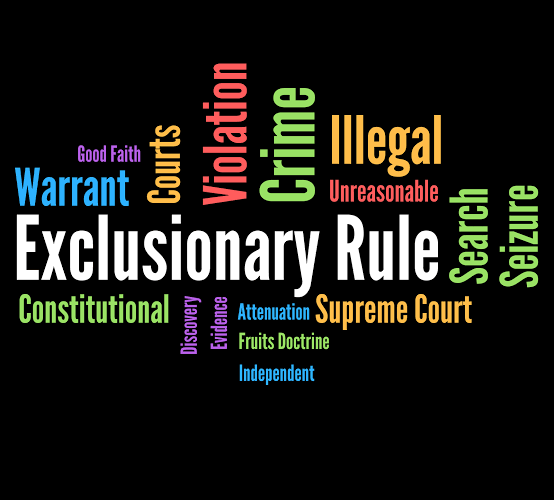
However a rule that leads to the acquittal of the accused person because his or her rights were violated by the police is also overboard and unfair especially where there is untainted evidence against the accused person. There is a less burdensome means of achieving the public interest in protecting the fundermantal rights of suspects and law abiding citizens in the form of excluding the tainted evidence but admitting the evidence that is not tainted by illegal police conduct.
The Constitutional court is right, there is need to balance victim rights and rights of the accused person. Excluding the tainted evidence is legitimate and necessary but dismissing the entire proceedings is overboard. If there is other untainted evidence against the accused person why should the prosecution not proceed? Why should the illegal conduct of a law enforcement officer prevent use of untainted evidence? Can’t the public interest in protecting fundermantal rights be served by an exclusionary rule that excludes tainted evidence but allows the admission of untainted evidence?
The Constitutional Court asked its self the right questions as required by the Supreme Court Dimanche Sharon & Ors v. Makerere University (2006).
- Does the requirement to dismiss the proceedings against the accused person serve a legitimate state or public interest?
- Is the solution proposed by Parliament reasonable way of addressing the state or public interest?
- Does the solution proposed by the Parliament unduly burden the rights of individuals such as victims?
- Is the solution proposed by Parliament the least restrictive means of achieving the important state or public interest.
While emphasising that allegations of torture and other human rights violations must be addressed, the judges ruled that such violations do not automatically extinguish criminal responsibility.
Instead, courts may exclude illegally obtained evidence, award compensation or grant other appropriate remedies while allowing criminal trials to proceed. The court further held that acquittals can only result from a full trial in which evidence has been properly evaluated.
ReadMore
- Order 11A of the Civil Procedure Rules (CPR) on automatic abatement of suits Uganda is ultra vires due to Section 96 of the CPA
- Court retains the discretion to set the terms for mandatory bail in Uganda under Article 23(6)(b) and (c) of the Constitution of Uganda
- An interest in land can not be extinguished by legislation without compensation. Nampewo & Another v Attorney General (Constitutional Petition No. 10 of 2020) was wrongly decided by the Constitutional Court of Uganda
- Common Law applies in Uganda as a result of Section 14 of the Judicature Act
- Do the Magistrates Courts have the power of Judicial Review in Uganda